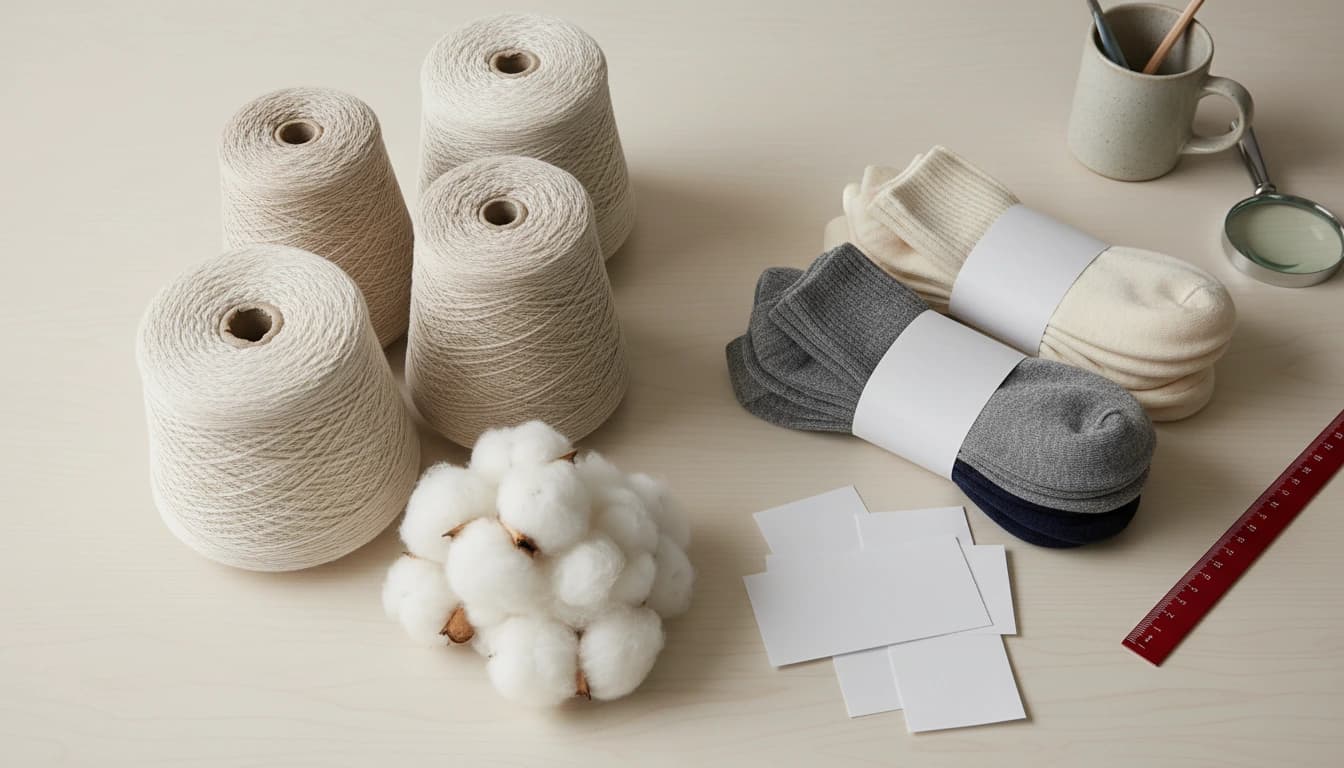
The case for cotton-rich blends
Cotton-rich blends are familiar and can suit comfort-led lifestyle, gifting, and retail-basic programs.
The final blend should be reviewed against fit, durability, stretch, color, price, and the intended wearing conditions.
When to choose performance synthetics
Nylon, polyester, and elastane can contribute stretch, durability, recovery, and moisture management in active-use products.
Studio grip, compression, and sport programs need a product-specific review of construction, wearer use, and performance expectations before a blend is selected.
- Everyday retail: compare skin feel, thickness, fit and appearance after washing.
- Active use: define the activity, footwear, cushioning and moisture-management requirement.
- Grip or specialist products: review the whole construction, not only the yarn blend.
Compare samples under the same conditions
Give each sample the same intended size, footwear and use case. Record where it feels tight or loose, whether the cuff stays in place, how the toe seam feels and whether the cushioning suits the wearer. A preference for one sample is useful feedback, not a certified performance result.
Review washing using the proposed care instructions. Compare fit, shape, color and surface appearance before and after. Agree any formal test method and acceptance criteria with the supplier before treating a result as approval evidence.
- Fit and recovery: compare cuff, heel position and toe room.
- Wearer comfort: note seam feel, thickness and cushioning in the intended footwear.
- After washing: record visible changes and the conditions used.
Which material claims need supporting evidence?
Ask what supports a proposed claim such as recycled content, moisture management or enhanced durability. Check whether the evidence concerns a yarn, a fabric sample or the finished sock, and whether it applies to the material and construction being quoted.
A yarn description or an illustrative image is not proof of finished-product performance or certification. If the evidence is not available, keep the claim out of the approved product copy while you review alternatives.
Not sure which blend to request?
Describe the wearer, activity, preferred feel, thickness and any must-have performance requirement. A reference product can help explain the direction. You can request a material review without selecting an exact fiber percentage first.