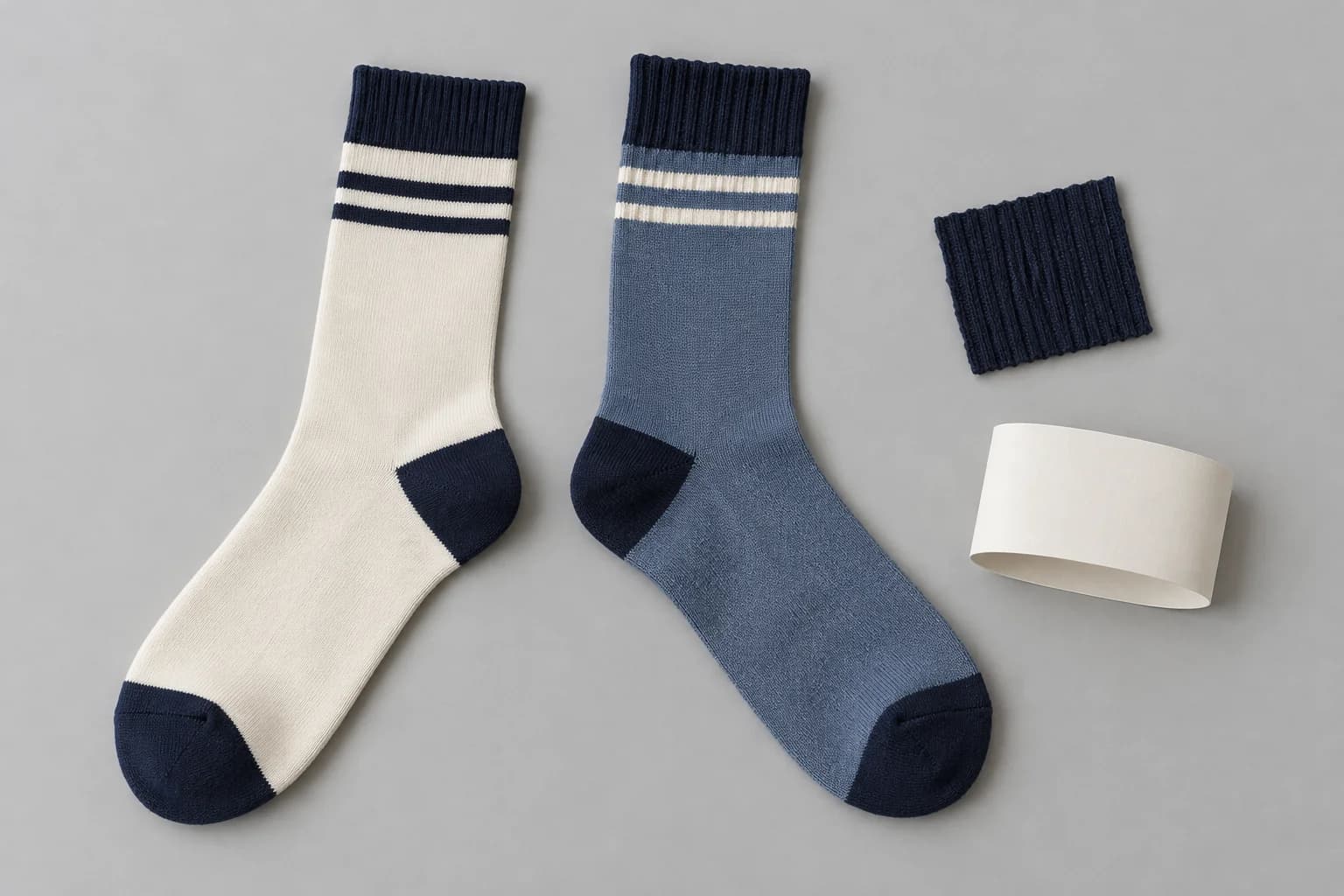
Start with the commercial target
Lead with the market, launch timing, and expected use. A crew sock for retail behaves differently from a grip sock for studio resale or a promotional pack for an event kit.
When the factory understands where the sock is going, it can make better calls on yarn, packaging, MOQ, and which details actually matter in sampling.
Keep the first request operational
A useful first brief normally includes quantity range, length, size expectation, color references, logo placement, and whether packaging must be retail-ready.
That is enough to let the factory respond with a realistic path instead of a generic brochure answer.
- Target market and delivery window
- Sock type, length, and fit direction
- Quantity range and variation count
- Brand references, colors, and packaging requirements
Use the first reply to check who owns each step
The first reply should make it easier to see who is coordinating the sample, QC, packaging, documentation, and shipment thread. If the answer only repeats a price and asks for final artwork later, the buyer still does not know how the production path will be controlled.
This does not require a public factory claim. It requires an operational answer that connects the decisions a commercial buyer has to approve before the first sample becomes expensive.
- Who reviews sample changes and locks the pre-production approval path?
- Which QC checkpoints match this product type and quantity band?
- When are packaging, labeling, and carton assumptions reviewed?
- Which destination or documentation requests can affect timing?
Ask the questions before choosing the manufacturer
Ask how the first sample moves toward bulk, which decisions stay open, and which proof or document requests belong in the quotation path.
Red flags show up when the reply avoids ownership of approval steps, treats packaging as a late add-on, or cannot explain what changes between proof, development sample, pre-production approval, and bulk release.
Review the reply without turning it into extra homework
Use these optional prompts to discuss an answer, not to complete a qualification checklist before contacting SaySock. An unanswered item is a reason for a conversation, not a reason to delay your inquiry. We can help shape a rough idea; experienced teams can use their existing specifications as the starting point.
A proposed process or a written explanation is not an inspection record or a certificate. Where evidence matters to your order, confirm what the document covers and when it can be reviewed rather than treating a general assurance as proof.
| Buyer question | Reply or evidence to review | Open decision and next step |
|---|---|---|
| Sample changes: what will be revised and approved? | A stated revision scope and the sample or file version proposed for approval; a proposal is not final approval. | Identify the open fit, artwork or construction question and discuss the next sample decision with us. |
| Proposed QC checks: what will be checked for this order? | The proposed checkpoints and review criteria; distinguish this plan from an actual inspection record or certification. | Agree which checks matter to the product and who reviews the results before treating them as acceptance evidence. |
| Packaging approval: which version is included? | The proposed format, artwork version and assembly scope; confirm whether a packaging sample or approval is still outstanding. | Discuss any undecided format, label or carton detail and identify the version to review with the sock sample. |
| Documentation and delivery scope: what is included or still open? | The listed document scope, destination and delivery endpoint, including exclusions; an explanation is not origin or compliance proof. | Tell us any buyer-required documents and clarify the endpoint and open responsibilities before comparing offers. |
Let the second round do the fine detail
Do not try to solve every knit construction detail in the opening message. The second round is where embroidery limits, grip placement, exact packaging dielines, and carton logic should tighten up.
A concise first brief leaves room for the production review to focus on the details that actually affect feasibility and quotation.