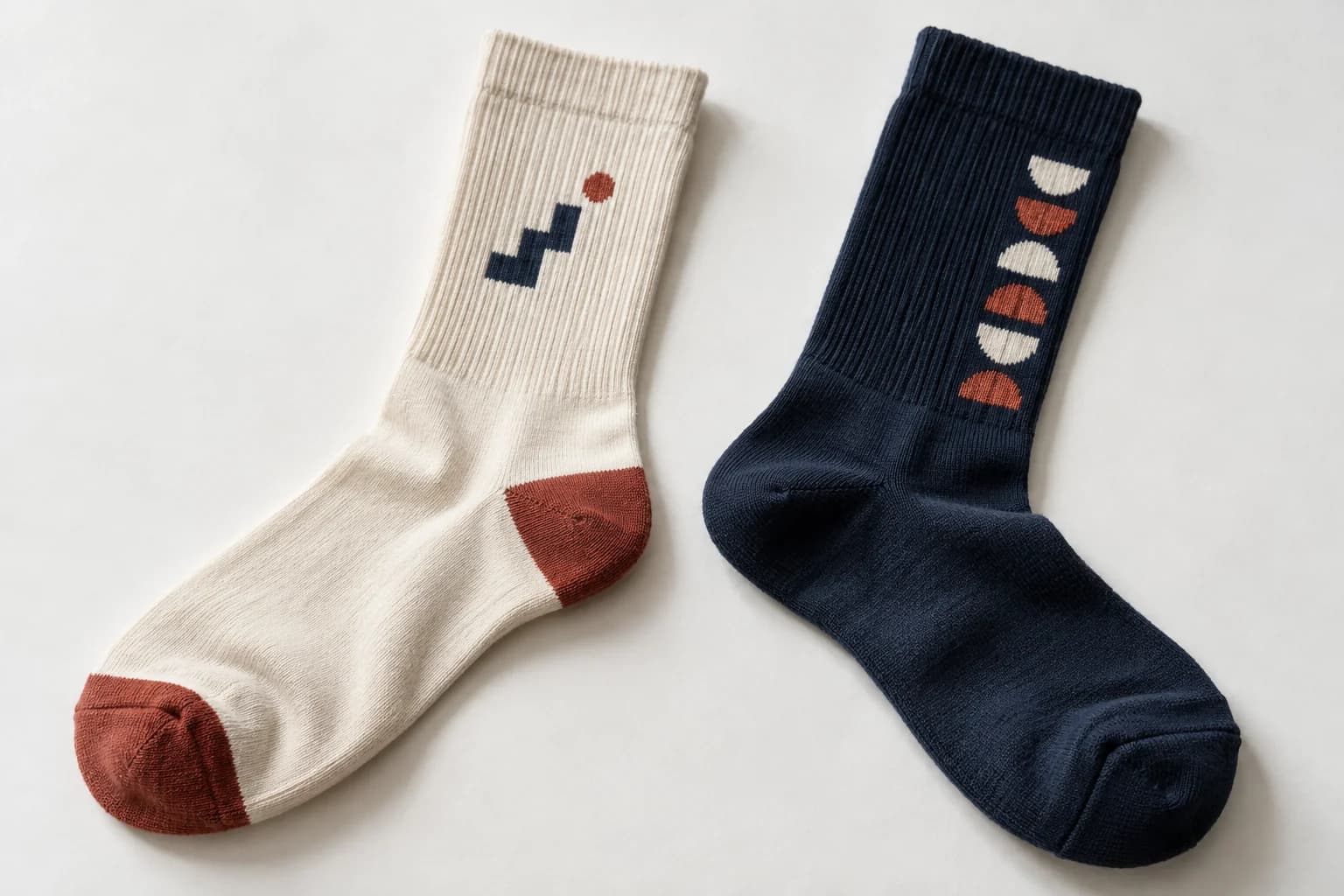
Bring your sock specification or a commercial product idea. We can help you work through construction, material, sampling and packaging. Share what you know now; artwork and undecided details can follow.
OEM review pathOEM work starts with the buyer brief, then tightens toward production release
An OEM brief should keep product specifications, materials, packaging, and destination assumptions in one review before bulk production.
Start with your specification or your sock idea.
Keep decisions you have already made. Where the product is still open, use the sample to compare the choices that matter to your buyer.
I have an existing specification
Keep the fit and branding you have approved. Review the sample against your reference and discuss any changes to packaging.
Retail crew socks: keep the agreed product details
Suppose your team wants another retail crew sock run using an existing specification and approved reference. The fit, cuff height and logo placement are settled, but the shop display is changing. Share the current specification, artwork version and reference; we can review those fixed details without redesigning the product. Any proposed material or construction substitution needs discussion, not an assumed approval.
Retail crew socks: check the sample and new packaging together
Compare the sample with your reference for fit, cuff comfort, knit detail and logo position. If you are considering a belly band instead of a hang tag, review how the folded pair displays the design and where size and label information would sit. The packaging format and artwork can remain open for discussion. Confirm which sock and packaging versions are being approved; a matching image alone does not confirm feel or fit.
Start with the wearer, use and design direction. We can help compare material, cushioning and knit choices before settling the specification.
A new branded sock: start with the wearer and design idea
Suppose a brand wants a logo crew sock for everyday use but has not chosen the material or knit weight. Bring the intended wearer, a logo or visual reference, and an approximate quantity and destination if known. We can help compare material direction, cushioning and cuff choices around that use. Final artwork and a full specification can follow; performance claims cannot be inferred from a fiber name or design preview.
A new branded sock: use the sample to narrow the choices
Agree which options the sample should compare, then review thickness, hand feel, stretch, cuff comfort and the knitted logo. Discuss whether a simpler motif or different placement would read more clearly. Material, construction and packaging stay open until reviewed with you; the example does not set a universal specification. We review direct Korean production first, with feasibility, MOQ, price and timing confirmed for the actual order scope.
These examples show two ways to start, not completed customer orders. You know your market; we can help turn the details you have into useful sample questions. You do not need to complete either brief before contacting us.
You can inquire now with what you know. Artwork, materials and packaging can stay undecided; these examples are not forms you need to complete.
What should an OEM socks manufacturer handle before OEM/ODM production?
An OEM socks manufacturer helps turn your buyer-owned specification or initial product direction into samples and a bulk production plan. At SaySock, direct Korean production comes first. Share what you know about product, quantity and destination; undecided artwork, material or packaging can follow. Feasibility, MOQ, price and lead time depend on specification review.
OEM production support for buyer-defined programs
Sample, QC, packaging, and shipment gates kept visible
Built for retail, distributor, merch, gifting, and private-label buyers
Keep your OEM specifications fixed where it matters, open where it helps.
We can work from an experienced buyer's specification or help develop a rough product direction. Use these choices to discuss what the sample should resolve; artwork and undecided details can follow the inquiry.
Buying decision
What changes
How we can help
Buying decisionFixed OEM specification or flexible development?
What changesA buyer-owned specification defines the details to reproduce and approve. Flexible development leaves material, fit or construction choices open for comparison; it does not mean a ready-made or pre-approved product.
How we can helpWe can review your existing requirements without reopening settled decisions, or help identify options where the brief is still open. Agree proposed substitutions rather than assuming them.
Buying decisionApprove the artwork or the physical sample?
What changesArtwork shows the design direction. Knit detail, logo scale and placement, stretch, fit and material feel need physical sample review; a digital preview cannot establish them all.
How we can helpWe can translate the design into sample questions and compare the result with your must-hold details. Note requested changes and which sample version you intend to approve.
Buying decisionApprove the sock alone or the complete pack-out?
What changesSock approval does not settle label text, size identification, retail packaging or carton quantities. Late changes to those details can require another review before bulk production.
How we can helpWe can review the approved sample alongside packaging, QC and shipment assumptions. Confirm remaining decisions together; a requested arrival date is not a delivery commitment.
Start with what you know; we can help develop the OEM brief.
Share your commercial product idea or existing specification. An approximate quantity, destination and timing help when known; artwork, material and packaging choices can follow.
These are useful discussion points, not extra submission requirements. We can clarify missing details and agree what to review in a quote or sample.
Buyer-owned spec, product family, target market, and use case
Must-hold details versus flexible details that can still change during sample review
Artwork, reference, material, packaging, and documentation status
Destination, launch timing, sample requirement, and approval owner
buyer-owned OEM program
Compare the closest sourcing paths.
OEM sock manufacturing support for brands and importers comparing buyer-owned specifications, sampling, packaging, QC, pack-out, documentation, and shipment planning.
Review the specification, sample, packaging and shipment assumptions behind each quote without relying on the pair price alone.
OEM sock programs need buyer-owned specs and factory-side release gates.
OEM fits a buyer-owned product direction that still needs a controlled path through sample, QC, packaging, and shipment.
Buyer-defined products with specs, references, or assortment logic already forming
Retail, distributor, and private-label programs that need production gates
Teams that need controlled execution rather than a consumer customizer
Separate must-holds from preferences
OEM review moves faster when the factory can see which construction, color, packaging, and compliance points are fixed.
Use gates to reduce ambiguity
Brief, sample, pre-production approval, QC, and shipment should each decide something specific.
Keep packaging inside OEM scope
Packaging and labeling often affect sampling, approval, and carton logic, so they should not be bolted on late.
Control vs. flexibility
Keep your fixed requirements visible and leave undecided choices open. We can review those choices together before agreeing the sample specification; they do not need to be settled before an inquiry.
Which document is your buyer asking for?
A testing agency, a social audit and a product certificate answer different questions. Before comparing suppliers, check what the requested document actually covers.
IDFL: clarify whether the request is for testing, a named certification scheme, or both.
amfori BSCI: review the specific production site's social-audit scope, not a finished-sock test.
OEKO-TEX STANDARD 100: check the covered article or material and the certificate's current validity.
Start with the requirement you know, or tell us it is still undecided. We can help clarify what to discuss; a completed document pack is not required to begin an inquiry. Availability must be checked for the proposed product and production site.
OEM briefThe first OEM brief should reduce guesswork, not create a specification maze.A useful OEM inquiry gives enough information for the factory to challenge assumptions, suggest a sample path, and flag missing production inputs.
Define product family, length, target use, and market
Share quantity band, variation count, and launch timing
Clarify artwork status, packaging expectation, and destination
List documentation or buyer compliance requests as program context
Separate must-hold requirements from ideas that can still change
Approval gatesOEM production should move through gates, not vague progress updates.The buyer should understand what each stage is meant to decide before bulk starts: product direction, sample approval, packaging release, QC review, and shipment handoff.
Confirms product direction, artwork translation, material feel, and any packaging assumptions that affect release.
Shipment gate
Keeps carton logic, destination, labeling, documentation, and timing visible before the handoff becomes urgent.
Buyer decision guideShow where the buyer owns the spec and where the factory tightens it.You know your market; we bring sock production input. Together we can distinguish the details to preserve from the choices to explore through sample review.
Start with the product you want to sell
Tell us who the socks are for and what you want them to do. If the material, construction or packaging is undecided, we can help narrow the options before agreeing the sample scope.
Bring your experience and existing specifications
For experienced brands and importers, your specifications, reference samples and market knowledge give us a useful starting point. We can review feasibility and sample requirements with you while preserving the details that matter to your customers.
Separate must-hold specs from flexible ideas
Share any fixed requirements and mark the rest as open. Product type, an approximate quantity and destination are helpful when known, but missing artwork or an undecided packaging plan need not delay the inquiry.
Choose your routeNot every custom sock request is an OEM program.OEM is useful when you want to develop a fuller product specification. A logo-led or promotional program may need a simpler route. If you are unsure which fits, describe the commercial use and we can help you choose.
This route is for commercial sock programs rather than personal one-off customization
A rough product idea is enough to start a discussion about the appropriate route
A logo or reference can be shared now; quantity, material and packaging details can be clarified together
Questions we can work through with your inquiry.
What is the difference between OEM socks and custom logo socks?
Custom logo socks can be a simpler logo-led program. OEM usually means the buyer is defining a fuller product scope, including construction, material, packaging, destination, and approval requirements.
Can OEM include packaging and labeling?
Yes. For B2B programs, packaging and labeling should be scoped early because they affect sampling, approval, carton logic, and shipment readiness.
What makes an OEM inquiry ready for review?
Share your intended product and commercial use, plus an approximate quantity, destination or timing if known. You can ask about MOQ, price or lead time without a finished specification or artwork file. We can help clarify missing details before a quote or sample scope is agreed.
What should an OEM or ODM sock production inquiry clarify first?
Tell us whether you have an existing specification or need help developing the product. Share any fixed requirements and what is still open. We can work through material, construction, packaging and sampling with you; you do not need to settle every detail before contacting us.
What should a buyer clarify before OEM sampling?
Clarify what is must-hold, what can still change, which artwork or reference is available, which packaging tier is expected, and who owns sample approval. That keeps the OEM path controlled instead of open-ended.
Ready for a production review?
Send the product, quantity band, destination, and what is still undecided.