SaysockRFQ
Korean custom socks manufacturingProduction-ready RFQ programs for importers, distributors, and retail-ready buyers
Buyer-ready production reviewRequest quote

Sourcing guide

Custom sock lead times: delivery timeline from brief to arrival.

Buyers searching how long custom socks take to deliver need more than a factory-days estimate. The useful answer is a delivery timeline: brief review, sample approval, bulk release, QC, packaging, documentation, shipping method, and destination all shape the date that matters.

How long does custom sock delivery take?

Custom sock delivery timing depends on the delivery window, artwork readiness, sample approval, production release, QC, packaging, documentation, freight mode, and destination. Plan backward from the needed arrival date and state which dates are fixed or flexible so SaySock can separate buyer-side approval time, production work, QC, pack-out, and shipping time.

Signal 01How long custom sock delivery depends on approval, pack-out, and freight
Signal 02Lead-time inputs buyers should send before the RFQ
Signal 03Shipping and destination assumptions that change final arrival date
Timeline planningLead time starts before bulk production
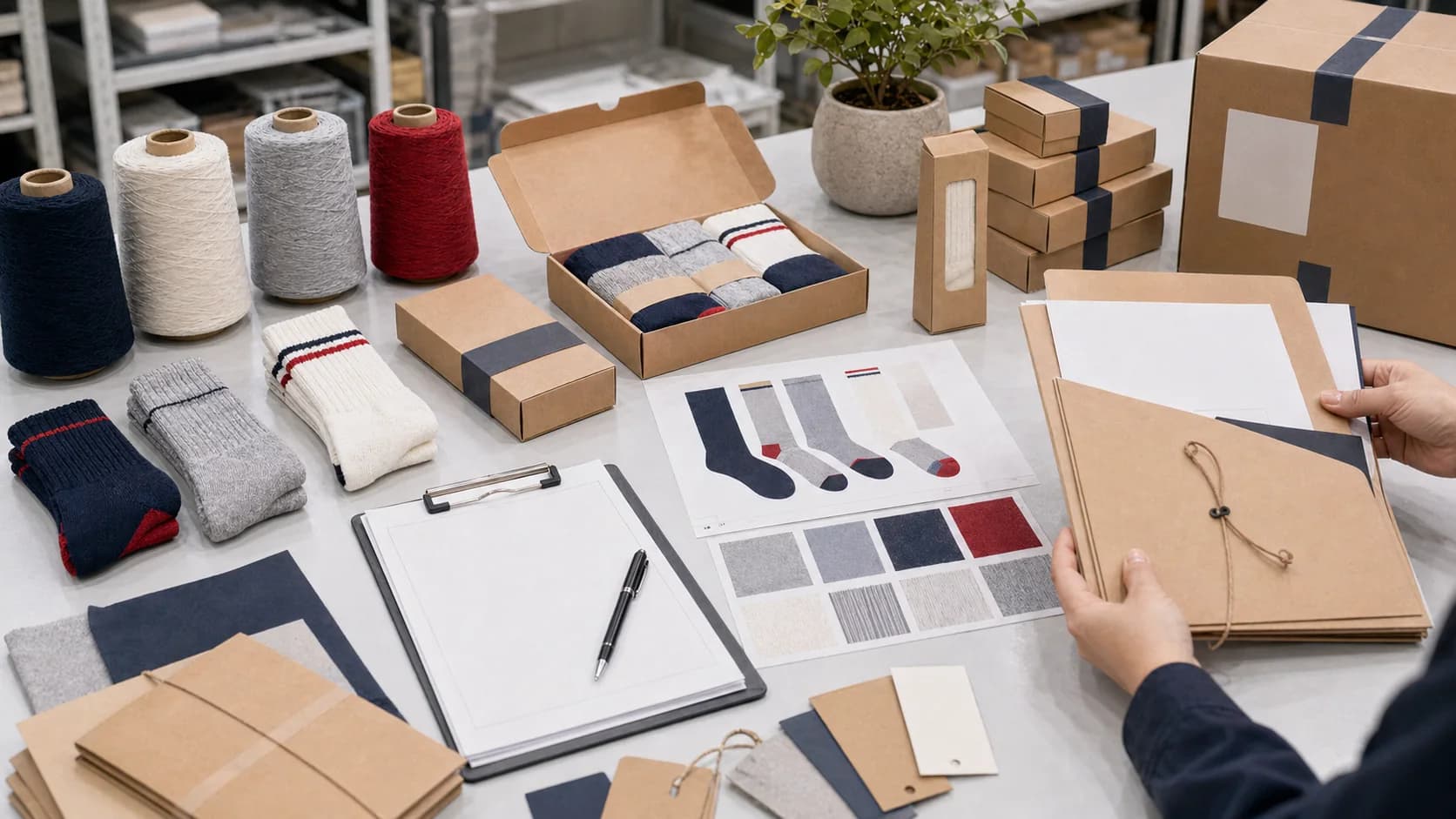
Production workflow cards arranged to illustrate sampling, approval, and shipping stages

Most delays happen in sampling, artwork approval, and packaging decisions, not in actual knitting. Buyers who prepare thoroughly make the first timeline reply more realistic.

Ask for a production review before every detail is final.

A useful first inquiry does not need a finished tech pack. If the buyer can state the product type, quantity band, target market, timing pressure, and packaging direction, SaySock can start the production review and narrow the missing points.

  • Use a rough quantity band instead of waiting for a final PO.
  • Name the channel: retail, private label, gifting, promo, or wholesale.
  • Say whether packaging is bulk-clean, wrapped, tagged, boxed, or still open.

Fast RFQ path

Move from comparison to a production review in one step.

Send the available commercial frame now. Artwork files, final carton logic, and program-specific documentation can follow when they affect the first reply.

Use this route when the buyer can explain the program shape, even if the pack is unfinished.

SaySock should not read as enterprise-only. A first serious run, private-label or OEM brief, distributor repeat path, promotional campaign, or larger repeat program can all start when the commercial frame is visible.

  • First serious runs are valid when product, quantity band, market, timing, and destination are clear.
  • Repeat and bulk context helps when SKU count, carton logic, or documentation pressure may affect the reply.
  • Promotional and gifting programs should name audience, deadline, packaging level, and delivery context.

What does not need to be final

Rough commercial frame is enough for the first production review.

Files are optional at first. Final artwork, exact carton counts, label copy, and documentation packets can follow when they clarify the review. The RFQ should separate confirmed inputs from open questions instead of waiting for a perfect tech pack.

Send rough commercial frame

Program board

Lock the channel, quantity band, and packaging shape before the first quote.

See how long custom sock delivery can take when sampling, approval, production, QC, packaging, documentation, shipping, and destination are planned together.

Timeline stagesWhat acceleratesShipping contextDeadline decision
Send this program for review
Stage 01

Every custom sock delivery timeline moves through the same core stages.

Understanding each stage helps the buyer plan realistic arrival dates and avoid compressed timelines that force compromises.

Stage 02

These buyer-side actions compress the timeline most.

The factory path moves at a relatively predictable pace. The biggest time savings come from the buyer's own preparation and decision speed.

Stage 03

Delivery method determines the last major time block.

Sea freight is most cost-effective for large orders but adds significant transit time. Air freight compresses delivery but costs more per unit.

Work backward from the launch date before asking for a lead-time promise.

Lead-time answers improve when the factory sees the real delivery window, approval path, packaging burden, and shipping assumption together.

  • Mark whether the deadline is fixed, preferred, or flexible.
  • Identify who approves samples, packaging, and final production details.
  • Surface packaging and shipping constraints before sampling starts.

Quote-ready prompts

Turn this program into a first reply with fewer open questions.

Launch window

Give the needed delivery date and the earliest date product can arrive.

Approval path

Name the owner for artwork, sample, packaging, and bulk approvals.

Shipping assumption

State whether the quote should assume air, ocean, courier, or undecided freight.

Send timeline context in the RFQ

Turn lead-time reading into a quote-ready launch calendar.

A useful timeline request gives SaySock the delivery window, approval owner, packaging burden, shipment assumption, and flexibility level together.

  • Needed delivery date and whether the date is fixed, preferred, or flexible
  • Approval owners for artwork, sample, packaging, and bulk production
  • Packaging or documentation steps that must happen before shipment
  • Freight assumption: air, ocean, courier, or undecided

Move from reading to production review

Send the specific buyer inputs into the RFQ form.

A lead-time question without approval and shipment context can make the first reply sound faster than the real program path.

Is the deadline real, flexible, or already at risk?

Work backward from the needed delivery date and separate factory production time from buyer-side approval time. The page should help the buyer see where delay usually enters the calendar.

  • which dates are fixed
  • who approves samples and packaging
  • which shipping assumption changes the final window

Before the next click

Keep the sourcing decision clear before the brief expands.

The buyer is trying to decide whether the launch date is realistic once sampling, approval, packaging, QC, and shipping are included.

Next move

Bring one clear decision into the RFQ.

Send the delivery window, approval owner, packaging state, and shipping assumption before asking for a lead-time promise.

What this helps you state in an RFQ

Work backward from the needed delivery date and separate factory production time from buyer-side approval time. The page should help the buyer see where delay usually enters the calendar.

  • which dates are fixed
  • who approves samples and packaging
  • which shipping assumption changes the final window

RFQ boundary

Keep the first production reply specific.

Is the deadline real, flexible, or already at risk?

Next move

Bring the clearer statement into the RFQ.

Send the delivery window, approval owner, packaging state, and shipping assumption before asking for a lead-time promise.

Program fit check

brief to delivery timeline

Lead-time and delivery-timeline planning guide for buyers asking how long custom sock delivery takes across brief, sampling, approval, production, QC, packaging, documentation, shipping, and destination.

Delivery timing is approval time plus production and shipping time.

A buyer asking how long custom socks take to deliver needs to separate artwork readiness, sample approval, packaging, production, QC, freight mode, and destination instead of chasing one generic date.

  • Buyers planning around a fixed launch date, event, or retail window
  • Teams comparing how their preparation affects total delivery timeline
  • Programs where shipping method and destination logistics matter

Production lens

Make the program specific before the first quote gets too broad.

Plan backward from the arrival date

The needed arrival date should reveal which steps are fixed, which can move, and which buyer-side approvals need owners before the schedule is quoted.

Lock packaging before production starts

Changing packaging during production adds rework that can shift the delivery date by weeks.

Choose shipping method early

Sea freight, air freight, and express courier each add different transit windows. The buyer should factor this into the launch calendar from day one.

Tradeoff

Speed vs. decision quality

Faster timelines require fewer open decisions. Buyers who want both speed and high customization need to prepare more thoroughly before the brief.

RFQ evidence

Send the inputs that make this program ready for a production reply.

  • Target delivery or launch date
  • Current design and artwork readiness
  • Sample approval decision-maker availability
  • Preferred shipping method and destination port or address
Send program evidence in the RFQ

Related decision path

Lead time and approval planning

Set realistic custom sock delivery timeline expectations across brief, sampling, approval, production, QC, packaging, documentation, and shipping.

Timeline stages

Every custom sock delivery timeline moves through the same core stages.

Understanding each stage helps the buyer plan realistic arrival dates and avoid compressed timelines that force compromises.

Timeline stages

Briefing and quote

The time between submitting an RFQ and receiving a production-ready quote. Completeness of the brief directly controls this phase.

Timeline stages

Sampling and approval

Physical samples are produced and shipped for buyer review. Approval speed is usually the single biggest variable in total lead time.

Timeline stages

Production and QC

Bulk knitting, finishing, quality inspection, and packaging. Duration depends on order volume, complexity, and QC requirements.

What accelerates

These buyer-side actions compress the timeline most.

The factory path moves at a relatively predictable pace. The biggest time savings come from the buyer's own preparation and decision speed.

  • Submit a complete brief with artwork, quantity, packaging, and timing upfront
  • Approve samples within one round — multiple revision loops add weeks each
  • Lock packaging decisions before production starts, not during
  • Confirm shipping method and destination early so documentation can begin in parallel
  • Set up any required compliance or import documentation before production completes

Shipping context

Delivery method determines the last major time block.

Sea freight is most cost-effective for large orders but adds significant transit time. Air freight compresses delivery but costs more per unit.

Shipping context

Sea freight

Standard for larger production runs. Cost-effective but requires the buyer to plan further ahead for the transit window.

Shipping context

Air freight

Faster transit for time-sensitive launches, smaller quantities, or sample shipments. Higher per-unit cost.

Shipping context

Express courier

Fastest option, typically used for samples and urgent small batches. Not practical for bulk production runs.

Deadline decision

Plan backward from the delivery date before asking for the shortest lead time.

A timeline is easier to quote when the buyer separates fixed launch pressure from decisions that can still move.

Deadline decision

Flexible launch

Use this path when sampling, packaging, or freight mode can change without missing a hard retail, event, or seasonal window.

Deadline decision

Fixed delivery window

Name the date, approval owner, destination, and shipment assumption early so the first reply can identify the riskiest stage.

Deadline decision

Repeat order

Keep material, artwork, packaging, and carton assumptions stable when the goal is to remove avoidable approval work from the calendar.

Frequently asked questions

Clear the keyword-level objections before the buyer leaves the page.

What is the fastest realistic timeline for a custom sock order?

With a complete brief, single-round sample approval, and air freight, the fastest realistic path is still measured in weeks, not days. Sea freight adds additional transit time.

Why do lead times vary so much between suppliers?

Because lead time includes buyer-side preparation, sampling rounds, production complexity, and shipping — not just the bulk run. A factory quoting shorter lead times may be omitting sampling or shipping from the estimate.

How can I reduce lead time for repeat orders?

Repeat orders with unchanged specs skip the sampling phase entirely, which removes the most variable stage. Keeping packaging and material specs stable further accelerates the path.

What should a custom sock lead-time RFQ include?

Send the needed arrival date, whether the launch window is fixed or flexible, artwork status, sample requirement, packaging state, approval owner, destination, and freight assumption. That lets SaySock review the real delivery timeline instead of quoting a vague factory-days estimate.
Need a concrete next step?

Send the quantity, channel, and packaging need. We will narrow the build fast.

Send production RFQ