Source custom socks from Korea
Compare the direct Korean production path for a new design, an existing specification or a repeat program.
Custom socks manufacturing in KoreaOptional readingCompare custom sock quotes
Ask about Korean productionExplore MOQ, samples, packaging, materials, sizing, and timing. Use the guides to compare options or bring questions straight to your inquiry.
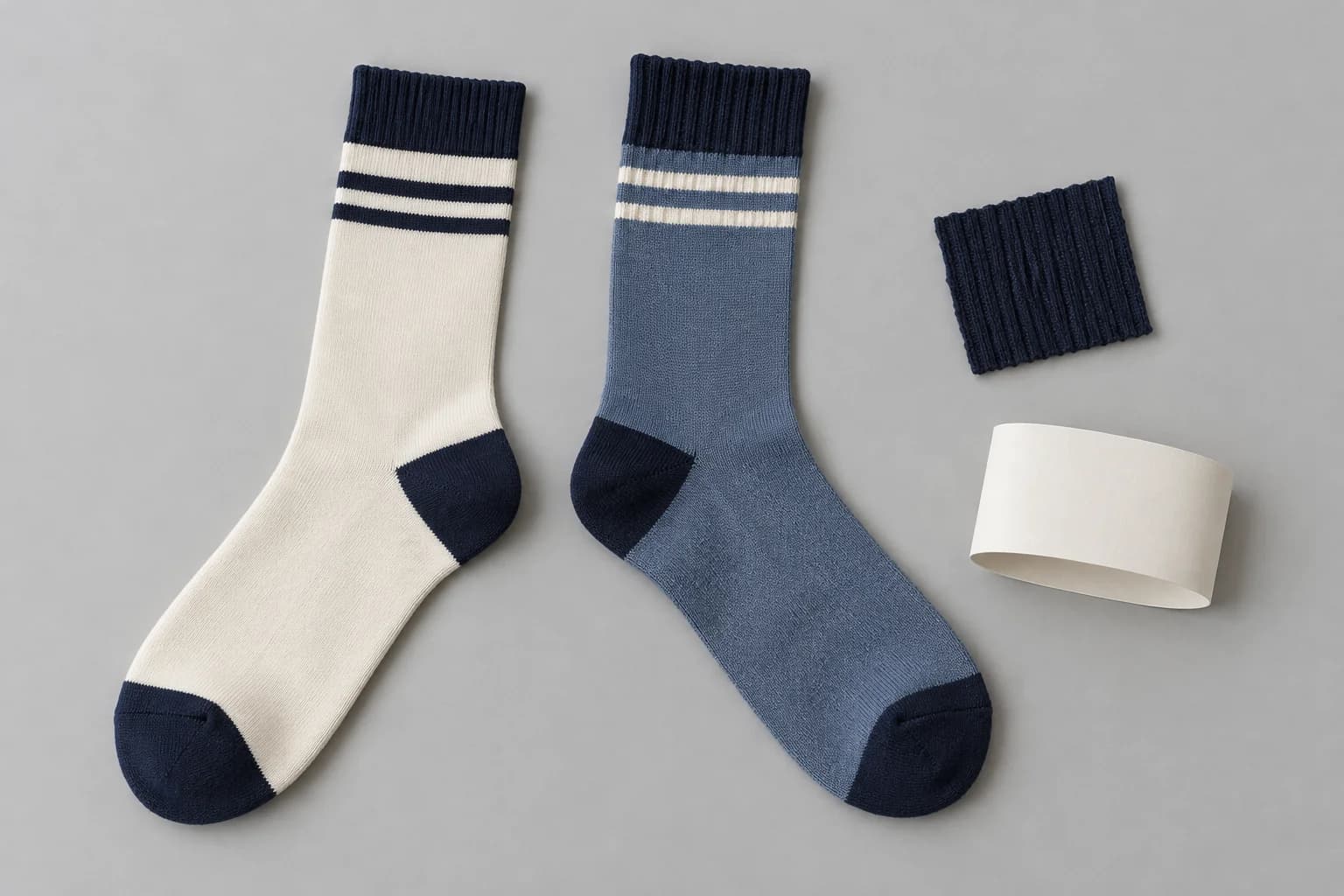
Use these examples to identify product, material, packaging, and approval details for the first quotation review.
Start with your idea or an existing brief. We can help with the details that are still open.
Compare the direct Korean production path for a new design, an existing specification or a repeat program.
Custom socks manufacturing in KoreaWork through product choice, your label and a manageable assortment for your brand or store. We can also work with an established retail brief.
Private-label socks for your brandExplore logo placement, sock style and packaging for merchandise, gifts or a campaign. Artwork and quantities can still be undecided.
Custom logo socksSend the product type, quantity band, packaging direction, target market, and the point that still needs review.
Send what you know and call out what still needs review. Final artwork and packaging files can follow.
Free buyer tools
These optional tools can help you explore design, timing, and RFQ details. No account is needed, and you can send an inquiry without using them.
Set the needed arrival date, destination, artwork state, sample path, packaging state, and freight assumption before asking a production team to review timing.
See what is still needed to plan delivery, then include it in your quote request.
Plan timeline readinessUse the browser-based builder to show sock style, color blocking, label text, grip, packaging, and an optional logo without creating an account.
Output: a downloadable SVG mockup and a copyable visual RFQ brief. No account is required.
Open the free custom sock mockup builderOrganize product type, quantity band, target market, material direction, packaging, sampling, timing, destination, and documentation before requesting a quote.
Output: a tighter first-production brief without requiring final artwork before review can begin.
Open the RFQ checklistBuyer guide answer
A custom sock buyer's guide should help a commercial buyer compare manufacturer fit, sample ownership, QC checkpoints, packaging approval, documentation scope, destination, and shipment assumptions before sending an RFQ. The goal is not to rank suppliers; it is to decide which production questions need review.
| Buyer search | What to evaluate | RFQ input |
|---|---|---|
| custom socks buyers guide | Product type, quantity band, target market, material direction, packaging direction, and the open production risk. | Product family, first-run quantity, market, material direction, packaging tier, and deadline. |
| socks supplier audit checklist | Who owns sample changes, QC signoff, packaging approval, document scope, and shipment assumptions. | Sample owner, QC checkpoint, packaging owner, document needs, destination, and freight assumption. |
| custom socks manufacturer vs supplier | Whether the reply connects sample, QC, packaging, documentation, and shipment in one production plan instead of only forwarding a price. | The buyer question still blocking production review plus the route that should answer it first. |
Start with the sock family, then narrow by length, cuff behavior, logo treatment, and channel fit.
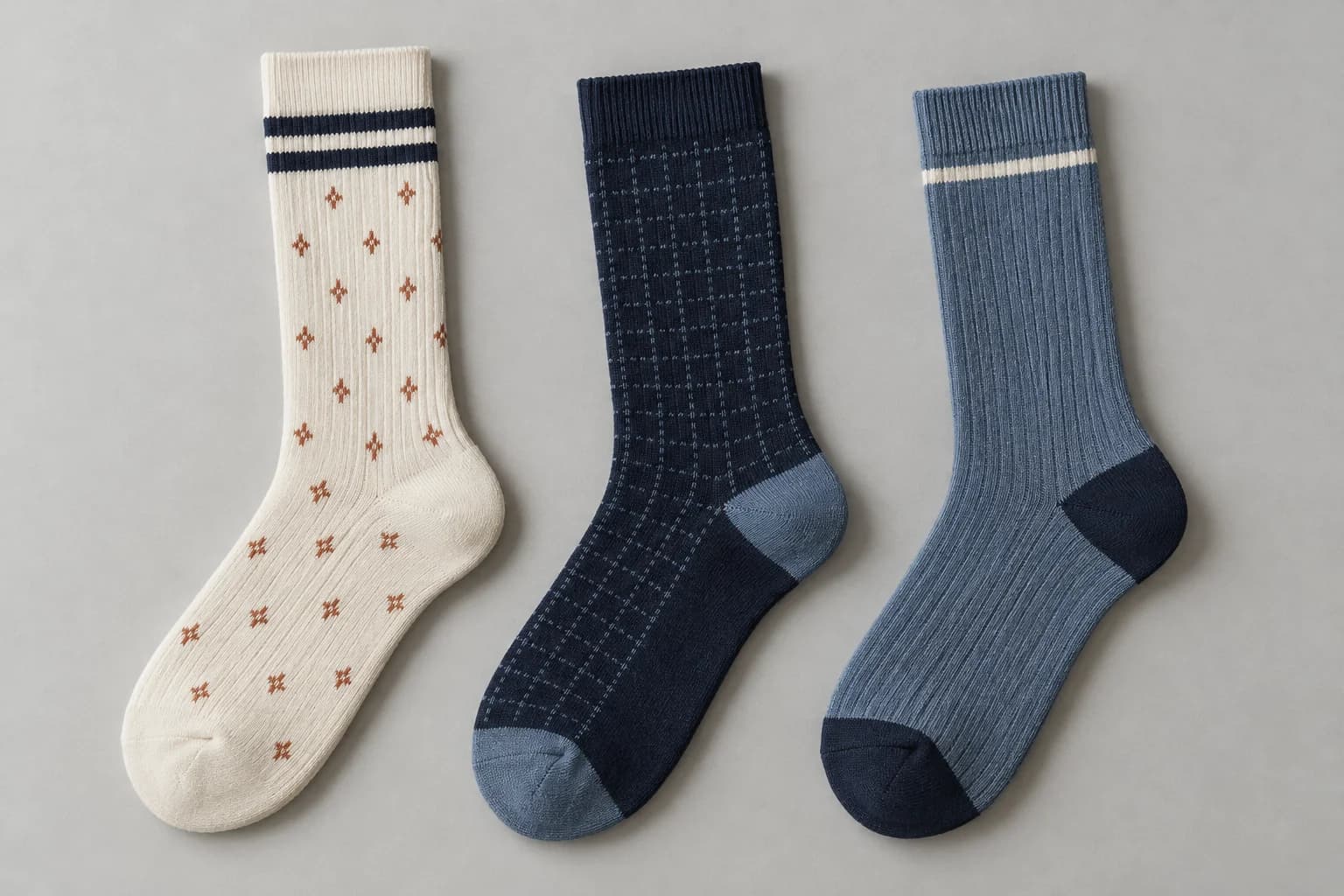
Style selection works better when buyers compare crew, dress, grip, gifting, and promo directions as commercial options instead of treating every request like a blank canvas.
If this guide clarifies the style route, carry the sock family, length, logo role, channel, quantity band, packaging direction, and destination into the RFQ.
Starter guides
MOQ only makes sense when it is tied to construction, packaging, variation count, and the actual channel.
Open guideDigital proof, development sample, and pre-production approval sample should not be treated like the same checkpoint.
Open guideTreat the palette as an assortment decision tied to product, channel, and packaging.
Open guideUse wraps, tags, sleeves, or cartons only when they improve how the product lands in retail, gifting, or curated assortments.
Open guidePlan one-size, adult range, youth sizing, or deliberate size splits by channel, quantity band, packaging, and sample-fit risk.
Open guideUse a stage-by-stage checklist for arrival date, proof timing, sample approval, packaging, bulk production, shipping assumptions, and final receiving risk.
Open guideA clean artwork handoff helps the first reply focus on placement, color, knit readability, and open production questions.
Open guideUse resources to organize product route, MOQ, material, packaging, sample, documentation, destination, and shipment decisions before the first factory review.
Proof and education next step
Open the guide that matches the missing decision, then return to RFQ when the product, pack-out, and destination context can travel together.
What this hub covers
These pages are designed for buyers who want a cleaner first reply from the factory. The goal is to clarify quantity, packaging, materials, and timing before the production conversation starts.
Check whether product scope, quantity band, sample path, QC checkpoints, packaging, documentation, destination, and shipment assumptions can stay in one production thread instead of becoming reseller-style handoff risk.
Unclear packaging direction, missing size assumptions, vague sample ownership, and capability questions that arrive after the quote has already started are early red flags. A useful procurement guide turns those risks into questions before the buyer asks for price.
Ask who owns sample changes, which QC checkpoints matter, how packaging is approved, what documentation belongs in scope, how shipment assumptions stay attached to the quote, and whether the reply explains a production thread or only passes along a supplier price.
MOQ changes with construction, packaging, and variation count. Ask for the practical floor for the exact build being reviewed.
Brief checklist
Buyers do not need a perfect spec sheet to start. They do need enough structure that the first reply can move straight into product, material, and packaging logic.
Priority sourcing guide clusters
Use this path when the buyer is comparing Korea-first custom sock manufacturing, OEM execution, private label product systems, or wholesale supplier repeatability before deciding which RFQ inputs matter most.
Primary decision pageKorean custom socks manufacturer routeExplain how a Korea-first custom socks manufacturer route helps commercial buyers connect product family, quantity band, sample path, packaging, QC, shipment, destination, and documentation context before RFQ.
Related manufacturer routesPresent OEM socks manufacturing for brands and importers from buyer-owned specifications and samples through packaging, QC, pack-out, documentation, and shipment.
Explain how a private label and white label socks manufacturer route connects product shape, material direction, label system, packaging tier, SKU count, quantity band, sample need, destination, and repeat-order logic before RFQ.
Explain how a custom socks wholesale manufacturer and wholesale supplier route helps distributors and importers connect product family, quantity band, SKU mix, carton planning, destination, reorder logic, packaging, and delivery-window context before RFQ.
Use this path when the buyer is trying to connect order floor, SKU count, material direction, packaging burden, and first-run repeatability before asking for an RFQ.
Primary decision pageCustom sock MOQ sourcing guideExplain what affects custom sock MOQ and minimum order quantity before the buyer asks for one MOQ number without product, material, packaging, SKU, colorway, destination, or first-run scope.
MOQ changes with yarn, construction, packaging, SKU count, and color variation.
Use this path when the buyer has a launch date, retail window, event, or holiday deadline and needs to separate proof, sample approval, packaging, production, QC, shipping method, destination, and receiving timing.
Primary decision pageCustom sock delivery timeline guideAnswer how long custom socks take to deliver by starting with the needed arrival date, then separating brief, sampling, approval, production, QC, packaging, documentation, shipping mode, destination, and delivery risk instead of quoting factory days alone.
Seasonal planning should separate sampling, approvals, production, packing, and freight.
Use this path when the buyer needs to compare bulk, sleeve, label, pouch, box, carton, retail, gifting, or ecommerce presentation before the production review.
Primary decision pageSock packaging options for retail programsCompare sock packaging options and explain how packaging changes MOQ, cost, timing, and channel fit.
Use this path when the buyer is choosing between cotton-rich, performance-led, or blended sock directions and needs to state the use case before sampling.
Primary decision pageCotton vs performance socks material comparisonCompare cotton-rich and performance sock blends for custom orders by comfort, moisture needs, durability, use case, sample direction, MOQ, and budget.
Cotton-rich, synthetic, and blended materials suit different wearer and channel needs.
Use this path when a brand, agency, retailer, or distributor has a logo, reference, annotated mockup, simulator draft, or rough brief and needs to clarify placement, color, knit readability, packaging carryover, and review steps before sampling.
Primary decision pageCustom logo socks for brands and merch teamsCustom logo socks for brands, agencies, retailers, and distributors, from artwork and knit-readability review through packaging, QC, and shipment planning.
Certification and audit review
Match the issuer, legal entity, facility, product or material scope, issue and expiry dates, and buyer requirement before relying on a certificate or audit report.
Open the sock manufacturing certification guidePrepare the requirement
A useful request states why the evidence is needed and whether it must be reviewed before quoting, sampling, bulk release, or shipment.
Prepare documentation requirementsAn anonymized first commercial run where packaging, size planning, and assortment clarity had to be solved before sampling could move cleanly.
Program examples
An anonymized campaign-style program where the best outcome came from simplifying variation, packaging, and shipment pressure instead of over-designing the product.
Open case studyAn anonymized merchandise-oriented example where the buyer needed a repeatable assortment structure, not a one-off novelty product.
Open case studyQuestions buyers ask
A useful custom socks buyers guide should help the buyer compare product fit, quantity band, sample path, QC checkpoints, packaging, documentation, destination, and shipment assumptions before the RFQ becomes only a price request.
A practical socks supplier audit checklist should ask who owns sample changes, which QC checkpoints matter, how packaging is approved, when documents are reviewed, and how shipment assumptions stay attached to the quote path.
Ask how the manufacturer reviews product fit, sample stages, QC checkpoints, packaging approval, documentation scope, destination, and shipment assumptions for the exact program instead of asking only for a unit price. Also ask who owns revisions and which decisions must be locked before bulk release.
Ask who owns sample changes, which QC checkpoints are used, how packaging is approved, what documentation is in scope, how shipment and destination assumptions are carried into the quote, and whether the reply connects those points in one production thread.
A manufacturer evaluation should show how product scope, sample changes, QC, packaging, documents, and shipment assumptions are controlled. A supplier-style reply often stops at price and catalog availability without explaining who owns the operating path.
Watch for replies that separate price from sample ownership, packaging decisions, document requests, QC checkpoints, or shipment assumptions. A stronger reply explains how those decisions stay in one production thread.
The main red flags are vague approval ownership, packaging treated as an afterthought, documentation handled only after pricing, and no clear explanation of what changes between proof, sample, pre-production approval, and bulk release.
Start with a range the factory can sample and pack cleanly instead of forcing too many variations into the first approval cycle.
Add packaging early when the launch depends on shelf presentation, gifting, or resale value rather than simple bulk delivery.
A logo file, color direction, target market, quantity band, and packaging expectation usually do more than a long mood board.
Fine details can tighten after the first reply, but quantity, timing, product type, and packaging direction should be clear from the start.