SaysockRFQ
Korean custom socks manufacturingProduction-ready RFQ programs for importers, distributors, and retail-ready buyers
Buyer-ready production reviewRequest quote

Material-led landing

Custom cotton socks for comfort-led retail, merch, and private-label programs.

Cotton-led sock programs work best when the buyer treats material as a commercial decision, not just a comfort word. The right question is how the yarn direction, product family, quantity band, packaging, and market position fit together before sampling starts.

When should a buyer choose custom cotton socks?

Custom cotton socks fit buyers who need familiar hand feel for retail basics, merch, gifting, or private-label programs. A useful cotton sock RFQ states the channel, quantity band, blend direction, thickness, color count, packaging tier, destination, and sample comparison needs without assuming the final build is 100 percent cotton.

Signal 01Comfort-led starting point for broad retail and merch use
Signal 02Material direction connected to sampling and price position
Signal 03Works across crew, dress, private label, and gifting programs
Material planningCotton only helps when the buyer knows the channel it has to serve
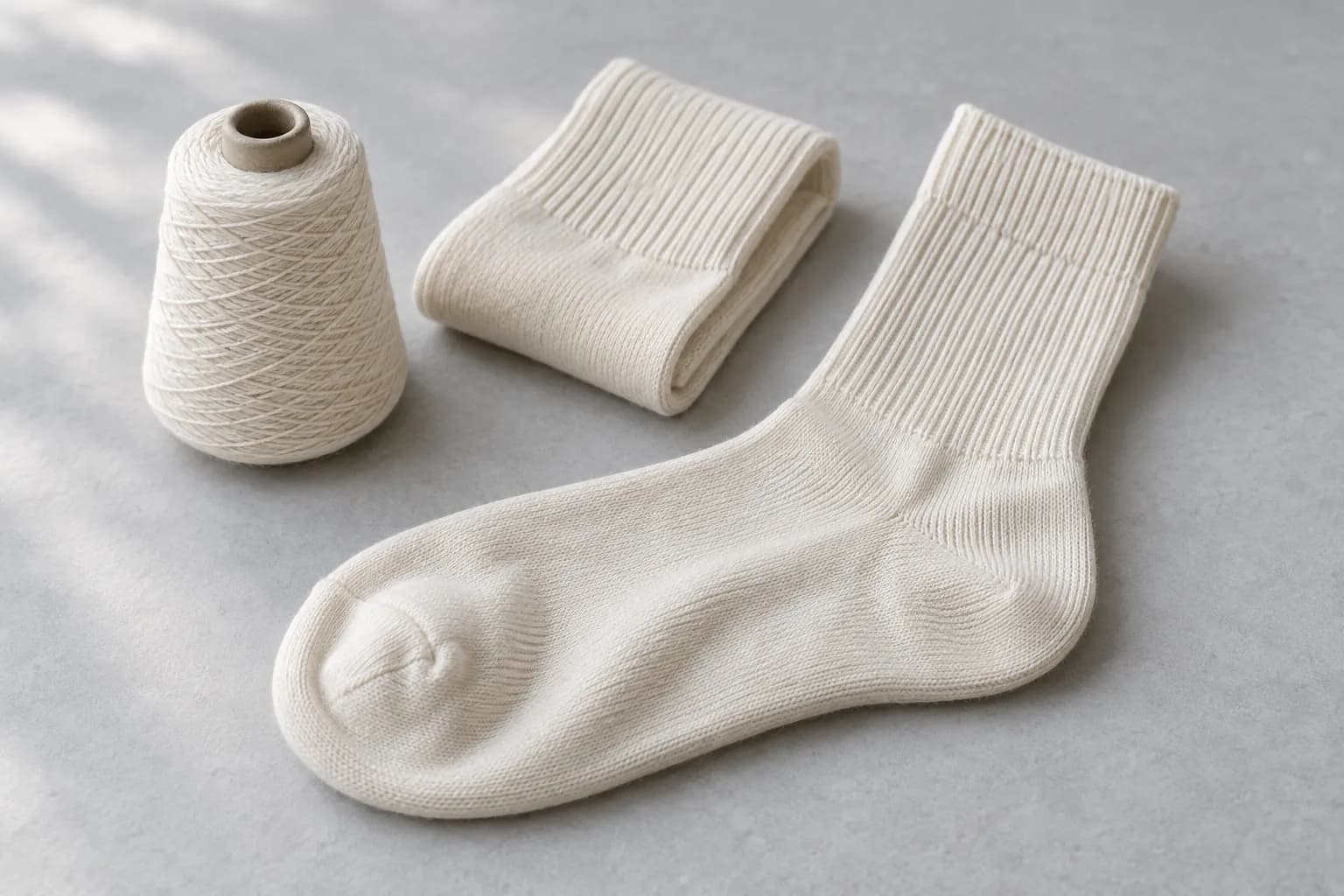
Cotton yarn cones, raw cotton, blank belly bands, and soft ribbed socks on a material review desk

A cotton-led program should connect hand feel, durability expectations, packaging, and price position before the sample path gets too detailed.

Related sourcing routes

comfort-led cotton base

Comfort-led cotton sock program for retail, merch, and private-label buyers who need familiar hand feel and practical sampling.

Cotton-led programs should define comfort as a commercial requirement.

Cotton is not a single outcome. The buyer should state what comfort, hand feel, price point, and wash behavior need to mean for the channel.

  • Comfort-led retail, gifting, lifestyle, and everyday merch programs
  • Buyers comparing material feel before locking an assortment
  • Programs where softness and wearability matter more than technical performance

Production lens

Make the program specific before the first quote gets too broad.

Define the comfort target

Softness, breathability, durability, and price do not always move in the same direction.

Match blend logic to channel

A boutique retail sock, a promo sock, and a repeat distributor item may need different cotton-led assumptions.

Use samples to compare feel

Material claims should become a controlled sample conversation, not a vague preference for cotton.

Tradeoff

Comfort vs. specification overload

A cotton route gets stronger when the buyer describes the wearer outcome instead of over-prescribing yarn details too early.

Buyer fit

Use cotton-led builds when the program needs familiar comfort before specialty behavior.

Cotton direction is strongest for buyers who need a reliable everyday product base that can move into retail, gifting, private label, or merch without forcing a niche performance claim.

Buyer fit

Everyday retail assortments

Good fit when the buyer needs a familiar hand feel and commercial product family that shoppers understand quickly.

Buyer fit

Private-label basics

Useful when the product needs to feel credible as a repeatable line instead of a one-off novelty run.

Buyer fit

Gift and merch programs

Strong when comfort, broad wearability, and clean packaging matter more than technical feature language.

Material brief

The first cotton inquiry should still include channel, quantity, and packaging.

A request for cotton socks is only useful once the factory knows whether the buyer is planning retail basics, a gift set, a branded merch run, or a more refined private-label range.

  • State whether the product is everyday retail, gifting, merch, or private label
  • Clarify expected hand feel, thickness, and seasonality in buyer language
  • Give a quantity band and variation count before asking for exact price
  • Attach packaging and destination assumptions to the same material review

Production logic

Cotton-led does not mean simple enough to quote blindly.

The final build still depends on construction, blend direction, sizing, color count, packaging, and launch timing, so the first reply should narrow the path instead of pretending one cotton answer fits every buyer.

Production logic

Blend and structure

Cotton-led programs may still need blended support for stretch, shape, or durability depending on the channel.

Production logic

Color and assortment

A tighter palette usually improves sample comparison and packaging consistency for retail and gifting programs.

Production logic

Pack-out fit

Cotton basics can look more premium when wrap, band, label, and carton logic are scoped early.

Weak fit

Cotton is the wrong starting point when the buyer is really asking for performance.

If traction, compression-like feel, recovery, or sport use is the actual decision, the sport or grip route is a cleaner place to start than forcing the brief into a generic cotton page.

  • Weak fit for grip-first studio programs
  • Weak fit for technical performance requests with no material tradeoff discussion
  • Weak fit when the buyer has no channel, quantity, or packaging context yet

Frequently asked questions

Resolve the practical questions before the production review starts.

Are cotton socks the safest starting point for new buyers?

Often yes, if the buyer needs familiar comfort and broad commercial fit. The route still needs quantity, channel, packaging, and destination context before production can be scoped usefully.

Can cotton socks be used for private label programs?

Yes. Cotton-led private label programs work well when material feel, assortment, packaging, and shelf presentation are planned together.

Does cotton mean 100 percent cotton?

Not necessarily. The exact composition should be reviewed against fit, stretch, durability, cost, and market expectations before the sample path is locked.

Need a concrete next step?

Send the quantity, channel, and packaging need. We will narrow the build fast.

Send production RFQ