SaysockKOREA
Factory-direct commercial sock programsImporters, distributors, and retail-ready programs
Korea-led production controlRequest quote

Kids and baby landing

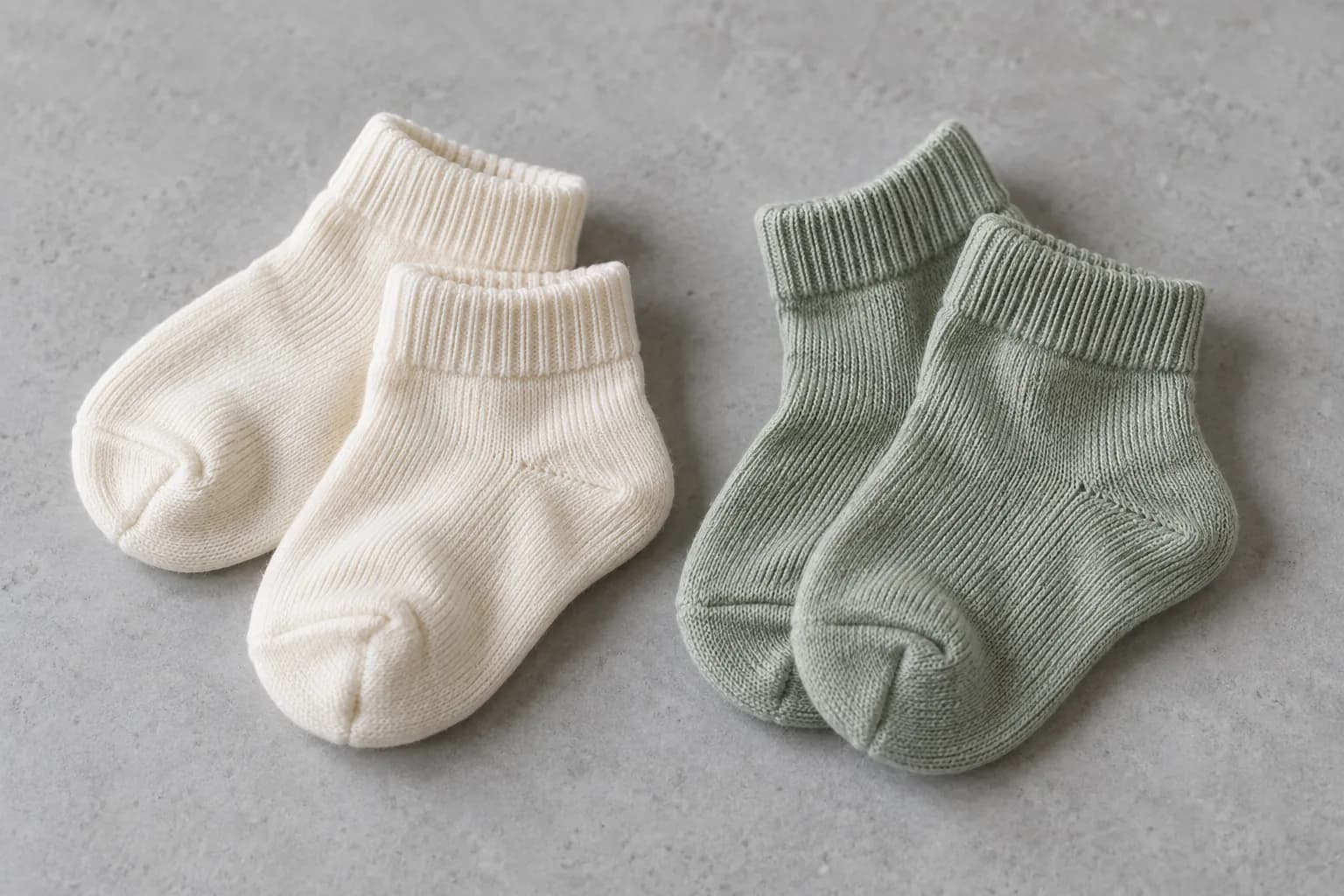
Kids and baby socks manufacturer support for documentation-sensitive B2B programs.

Kids and baby sock programs are not just smaller versions of adult socks. The buyer has to think earlier about size ranges, material direction, labeling, packaging, documentation needs, destination market, and approval gates.

Signal 01Kids and baby program scoping with size and label context
Signal 02Documentation-sensitive review without unverified blanket claims
Signal 03Built for retail, importer, distributor, and private-label buyers
Sensitive category reviewKids and baby programs need earlier documentation context
Clean quality review table with sock samples, yarn references, and packaging notes

The route should help buyers clarify age range, market, label needs, material expectations, and approval gates before sampling carries too much risk.

Program board

Lock the channel, quantity band, and packaging shape before the first quote.

Kids and baby sock manufacturing support for B2B buyers who need size logic, material review, packaging, documentation context, and careful approval gates before production.

Buyer fitFirst briefApproval gatesClaim discipline
Bring this into the RFQ
Stage 01

Use this route when the product has child or infant category risk attached.

Kids and baby programs are strongest when the buyer already knows the destination market, age range, size logic, retail channel, and whether documentation requirements belong in the first review.

Stage 02

Age range, market, and label context should arrive before artwork detail.

A kid or baby inquiry becomes much more useful when the buyer states who the product is for, where it will be sold, and what documentation or retailer context may affect the program.

Stage 03

The sample path should remove size, material, and label uncertainty early.

Kids and baby products need a cleaner checkpoint structure so the buyer does not discover late that size logic, pack-out, label content, or documentation context changes the production path.

Buyer fit

Use this route when the product has child or infant category risk attached.

Kids and baby programs are strongest when the buyer already knows the destination market, age range, size logic, retail channel, and whether documentation requirements belong in the first review.

Buyer fit

Retail and importer programs

Good fit when labeling, documentation, size range, and carton expectations need to be reviewed before quote depth.

Buyer fit

Private-label family ranges

Useful when the buyer is building an assortment that needs consistency across adult, kids, or baby lines.

Buyer fit

Gift and baby-focused bundles

Strong when packaging, recipient context, and material perception matter from the beginning.

First brief

Age range, market, and label context should arrive before artwork detail.

A kid or baby inquiry becomes much more useful when the buyer states who the product is for, where it will be sold, and what documentation or retailer context may affect the program.

  • State baby, toddler, kids, or mixed family range before styling detail
  • Name the destination country or retailer context early
  • Clarify size range, packaging format, and labeling expectations
  • Separate verified requirements from requests that need documentation review

Approval gates

The sample path should remove size, material, and label uncertainty early.

Kids and baby products need a cleaner checkpoint structure so the buyer does not discover late that size logic, pack-out, label content, or documentation context changes the production path.

Approval gates

Size gate

Confirms range, fit expectation, and whether the program needs multiple sizes or a simplified assortment.

Approval gates

Material gate

Confirms hand feel, construction, and any documentation-sensitive material questions before bulk release.

Approval gates

Packaging and label gate

Keeps wrap, tag, label content, carton, and destination assumptions visible before shipment pressure builds.

Claim discipline

Child-category trust comes from documentation, not badge decoration.

The site should not use old or generic certification language as proof for every kids or baby program. Buyer requirements should be scoped by market, retailer, facility, product, and current documentation status.

  • Do not publish broad safety claims without current proof
  • Tie documentation requests to destination and retailer context
  • Keep historic certification references out of the page unless validated for the program

Frequently asked questions

Clear the keyword-level objections before the buyer leaves the page.

What should a kids or baby sock RFQ include first?

Age range, size structure, destination market, quantity band, material expectation, packaging need, and any retailer or documentation requirement should be included before detailed artwork discussion.

Can kids and baby sock programs include private-label packaging?

Yes. Packaging, label content, carton planning, and documentation context should be reviewed together because child-category programs can become slower when these decisions arrive late.

Does this page claim specific certifications?

No. Certification and audit details should be handled through current, program-specific documentation review instead of broad public claims.

Need a concrete next step?

Send the quantity, channel, and packaging need. We will narrow the build fast.

Request quote