Start with the same sock, not the same headline quantity
Check whether each offer describes the same sock height, construction, material direction, size range, artwork and colorways. A crew sock with a small leg mark and a different knit construction is not the same specification just because both offers say custom logo socks.
Then compare total pairs and the allocation by design, color and size. A quotation for one design can carry different assumptions from a mixed assortment. If the final split is undecided, keep that uncertainty visible instead of treating an estimate as an agreed production specification.
Put the included work beside the price
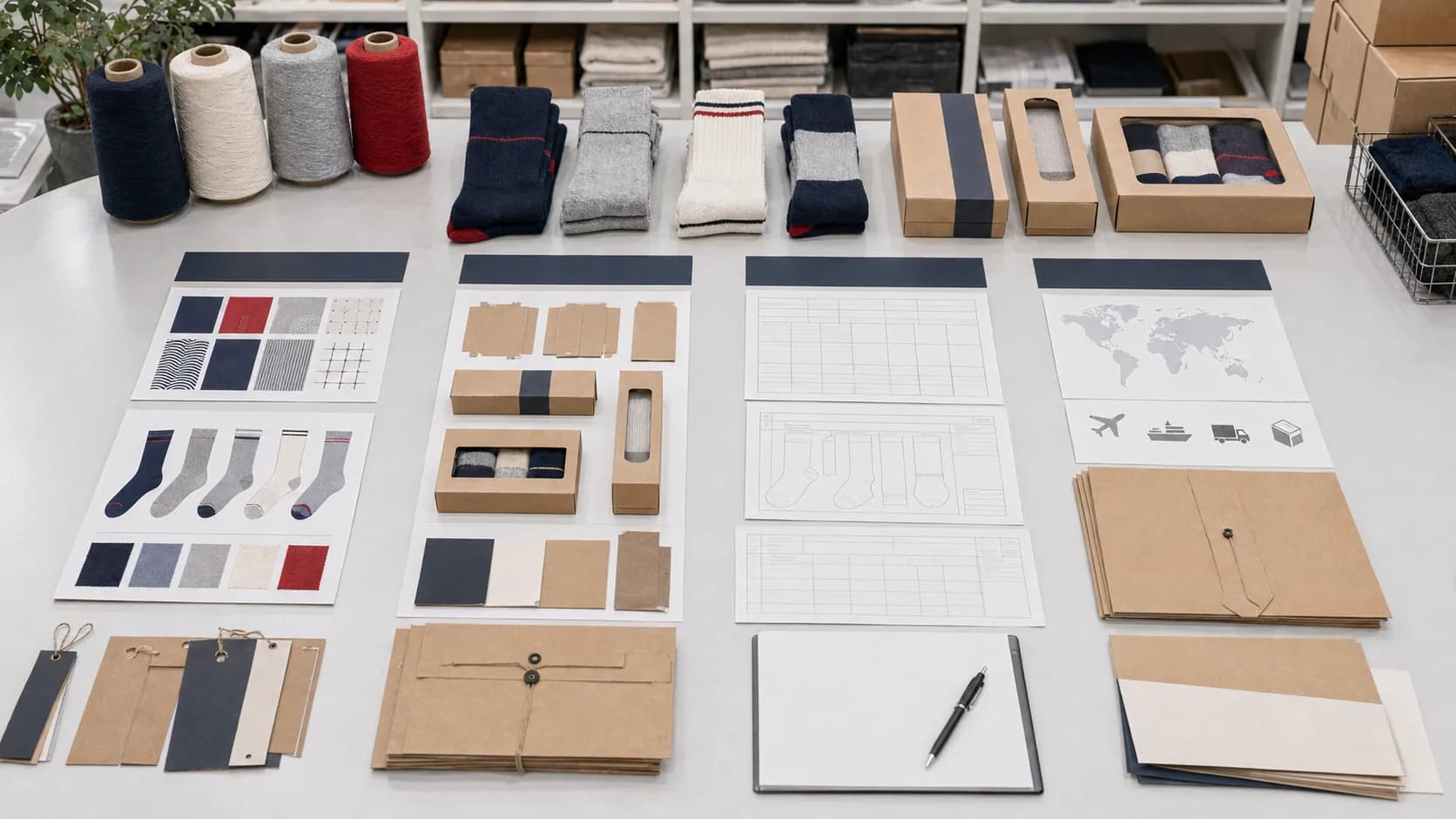
The worksheet below is blank: it does not contain actual supplier quotes or recommended prices. For each offer, record what is included, excluded, different or still open, and keep the quotation date and revision with your notes.
An open cell is not proof that a supplier cannot do the work. It identifies a question to return to that supplier. Compare the answers against your own requirements, including any requirements that can remain flexible.
| Compare | Offer A | Offer B | Question to clarify |
|---|---|---|---|
| Product and artwork | Open | Open | Are construction, material direction, logo, colors and sizes the same? |
| Quantity split | Open | Open | Do both offers use the same pairs per design, color and size? |
| Samples and revisions | Open | Open | Which proof or physical sample is in scope, and how are changes handled? |
| Packaging and pack-out | Open | Open | Are labels, wraps, boxes, pair counts and carton grouping included? |
| Quality review and documents | Open | Open | Which requested checks or documents can be confirmed for this program? |
| Delivery endpoint | Open | Open | Does the offer end at dispatch, a port or the named receiving address? |
| Charges and timing | Open | Open | Which charges are included or provisional, and which dates depend on approval? |
| Changes after quotation | Open | Open | What happens if quantity, artwork, packaging or destination changes? |
Separate a digital proof from physical sample review
A digital proof can help agree the design direction. It cannot confirm physical fit, hand feel or the behavior of the finished knit. Ask what a sample is intended to settle and which decisions will still be open afterward.
Compare who reviews requested changes and how the approved version is identified. There is no universal number of revisions or samples to assume. An experienced team can use its existing specification and approval criteria; a first program can start by asking us which checks matter.
Compare the same packaging and delivery endpoint
A price for socks packed in bulk is different in scope from individually presented pairs with printed packaging. Check the packaging artwork, labeling and carton assumptions, not just whether a quotation contains the word packaging.
Keep the destination and receiving endpoint explicit. Dispatch from production, delivery to a destination port and delivery to a warehouse are different points in the journey. Ask which transport charges are included, which may change and who will clarify import or receiving responsibilities. This guide does not establish a freight rate, tax amount or delivery promise.
Return the differences, not a request to match an unexplained price
Identify which differences matter for your program and ask each supplier to clarify those items. A useful comparison can still have open questions. Its purpose is to understand what each offer covers, rather than make every supplier look identical or assume the lowest visible unit price is the lowest complete cost.
You can contact SaySock before completing this worksheet. Share your idea, quantity or destination if known, and tell us where you need help. For an established program, we can work from your specifications and procurement criteria. Direct Korean production is our first priority; any alternative manufacturing involvement is reviewed when direct production is not feasible or after agreement with you. Do not send confidential third-party quotations just to explain your requirements.