Crew height should be reviewed for logo scale, cuff proportion, and fit before bulk release.
Free custom sock mockup tool
Explore your idea with a rough custom sock mockup.
Bring an idea or an established product brief. We can help with sock construction and artwork, building on your team's knowledge of its customers and range. The free mockup tool is optional; you can inquire without a file or a mockup.
Primary useFree rough sock mockup
Best fitLogo-led merch, retail, and private-label programs
Main inputsFiles, mockups, placement, colors
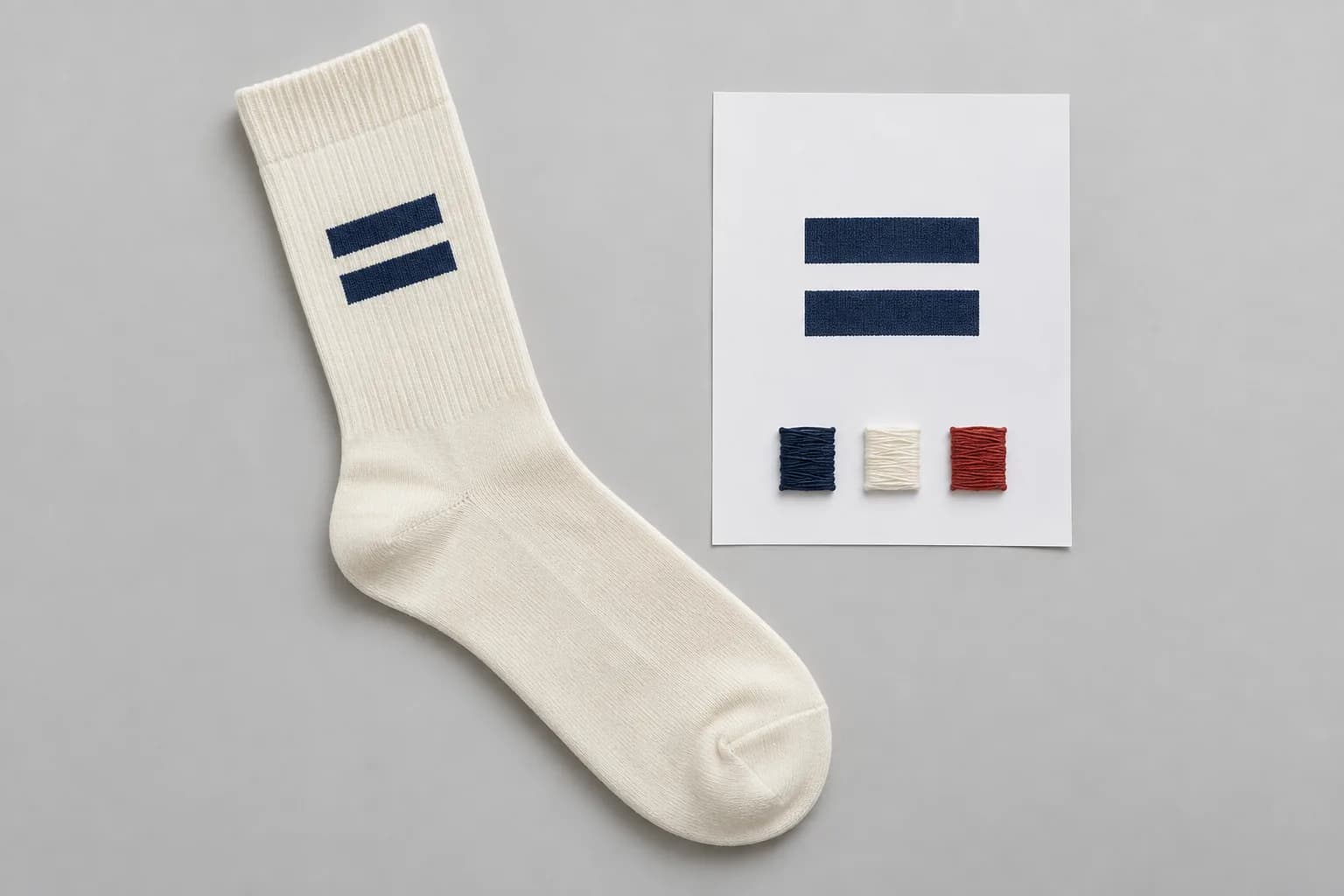
Share an idea or reference. We can help review placement, color and the details that need production review.
Free custom sock mockup tool
Build a rough custom sock mockup in your browser.
This is not final production artwork. It is a faster way to show sock style, palette, packaging, grip direction, and whether a lightweight logo file is already available.
%22%3E%0A%20%20%20%20%20%20%20%20%3Crect%20x%3D%22146%22%20y%3D%2290%22%20width%3D%22108%22%20height%3D%2210%22%20fill%3D%22%23d26b2c%22%20%2F%3E%0A%20%20%20%20%20%20%20%20%3Crect%20x%3D%22146%22%20y%3D%22106%22%20width%3D%22108%22%20height%3D%228%22%20fill%3D%22%23f7f4ee%22%20%2F%3E%0A%20%20%20%20%20%20%20%20%3Ctext%20x%3D%22200%22%20y%3D%22151%22%20text-anchor%3D%22middle%22%20font-family%3D%22Arial%2C%20sans-serif%22%20font-size%3D%2212.857142857142858%22%20font-weight%3D%22700%22%20fill%3D%22%23f7f4ee%22%3ESAYSOCK%3C%2Ftext%3E%0A%20%20%20%20%20%20%20%20%0A%20%20%20%20%20%20%3C%2Fg%3E%0A%20%20%20%20%20%20%3Cg%20data-preview-part%3D%22packaging%22%20fill%3D%22%23efe6d8%22%20stroke%3D%22%237a8691%22%3E%3Cpath%20d%3D%22M460%20156%20H644%20V284%20H460%20Z%22%20%2F%3E%3Cpath%20d%3D%22M478%20156%20V284%20M626%20156%20V284%22%20fill%3D%22none%22%20stroke%3D%22%237a8691%22%20%2F%3E%3C%2Fg%3E%0A%20%20%20%20%20%20%3Ctext%20x%3D%22552%22%20y%3D%22226%22%20text-anchor%3D%22middle%22%20font-family%3D%22Arial%2C%20sans-serif%22%20font-size%3D%2218.857142857142858%22%20font-weight%3D%22700%22%20fill%3D%22%2317283a%22%3ESAYSOCK%3C%2Ftext%3E%0A%20%20%20%20%20%20%3Cg%20font-family%3D%22Arial%2C%20sans-serif%22%20fill%3D%22%2317283a%22%20text-anchor%3D%22middle%22%3E%0A%20%20%20%20%20%20%20%20%3Ctext%20x%3D%22224%22%20y%3D%22372%22%20font-size%3D%2220%22%20font-weight%3D%22700%22%3ECrew%20sock%3C%2Ftext%3E%0A%20%20%20%20%20%20%20%20%3Ctext%20x%3D%22552%22%20y%3D%22372%22%20font-size%3D%2220%22%20font-weight%3D%22700%22%3ESleeve%20wrap%3C%2Ftext%3E%0A%20%20%20%20%20%20%3C%2Fg%3E%0A%20%20%20%20%3C%2Fsvg%3E)
The logo stays in this browser preview until you continue to the RFQ. Limit: 350 KB.
Current design summary
Crew sock | program Retail / Private label | review priority Packaging presentation | primary #173628 | accent #d26b2c | packaging Sleeve wrap | label SAYSOCK
Before this becomes production artwork
The mockup communicates visual direction only. Knit translation, fit, sample approval, packaging construction, price, MOQ, and timing still need production review.
What production will still reviewSample and fit cue Packaging cue QC cue Review priority
Sleeve wrap direction should clarify artwork band, size labeling, barcode needs, and carton grouping.
No grip selected, so the first review can focus on knit feel, color, label, packaging, and shipment context.
Prioritize how the sock preview, label text, and packaging tier will be judged by the sales channel.
Share what you have. We'll help with the next questions.
These are useful examples, not a checklist to complete before contacting us. A rough idea is enough to start discussing your socks.
- A logo file or reference, if you have one. Vector artwork can help with detail, but it is not required to start an inquiry.
- A sock design template or rough mockup, if it helps explain your idea. It shows direction, not production-ready artwork.
- Who the socks are for and any style you are considering. We can help clarify the product direction.
- How you would like the logo to look: prominent, subtle or repeated. Placement can stay undecided.
- Any colors you have in mind. We can review how the mark and colors may translate into knit.
- Packaging or label ideas, if known. These can follow after your first inquiry.
How we help
Work through the open details with us.
Build on your team's experience
Already have a retail range, artwork standards or a detailed specification? We'll work from those requirements and review knit translation, placement and sample questions with your team.
What can still stay flexible
Sock style, placement, colors and packaging can still be open questions when you inquire. We'll identify what needs a decision for a quote and what needs sample review.
Use a mockup if it helps
A rough sock design mockup can show placement or color ideas, but you do not need to make one to contact us. It is a discussion reference, not approved production artwork.
What we review with you
We review the available artwork, ask about missing details and discuss the quote or sample steps. Production feasibility and sample approval still need review; any design work is scoped separately.
Available references
Send what helps explain your idea.
You do not need every item below. Send what you have, or describe what you want to make. We can ask for more detail when it is needed.
- An available logo or wordmark, even if the final vector file will follow
- A reference, sketch or optional mockup showing an idea you want to discuss
- A preferred color or a question about which colors work together
- A placement preference, or a request for help choosing where the logo goes
- Any packaging or label ideas you would like us to review
Questions we can help with
Unsure how your artwork will work on a sock?
Choosing a logo version
Share the version you are considering. If you are unsure, explain the alternatives and we can discuss which details need review for the sock.
Finding a placement
Tell us whether you prefer a prominent name or a subtle mark. We can help review placement and scale against the sock style and knit readability.
Checking the mockup against production
We use a template or simulator draft to understand your direction. Knit translation, scale, color, packaging and sample approval still need production review.
Carrying the logo into packaging
If you want the same mark on a sleeve, wrap or hang tag, we can discuss that alongside the socks. Packaging artwork needs its own review before approval.
Design template and mockup intent
A rough idea can start the conversation.
Can I request a quote before final artwork is ready?
Yes. Share your idea and any details you know. We'll help clarify what is missing; final artwork can follow. Exact pricing depends on the specification, and production still requires artwork review and sample approval.
Should I use a sock design template or mockup?
Only if it helps you explain the idea. A reference or written description can also start the conversation. A mockup can be useful for discussing logo area, stripes, colors or packaging.
What should the mockup label clearly?
If you have a mockup, note anything you want to keep and anything you are unsure about. We'll review the open questions with you before treating it as production artwork.
Related preparation guides
More detail when you need it.
Artwork handoff guide
Optional file and reference guidance for when you are ready to share more artwork detail.
Open the custom sock artwork handoff guideAttachment guidance
Check file-sharing guidance when you have artwork or supporting references to send. Files can follow your initial inquiry.
Review custom sock file attachment guidanceSampling
See how proof, development samples and pre-production approval differ. We can discuss which step your program needs.
Review proof and sampling stagesQuote prep
See the details that help shape a quote. Share what you know; quantity, timing and packaging questions are welcome.
Open quote prepRequest quote
Tell us your idea and where you need help. We can clarify the product and artwork details with you; no finished file pack is required to inquire.
Open request quoteHave an idea or a question?