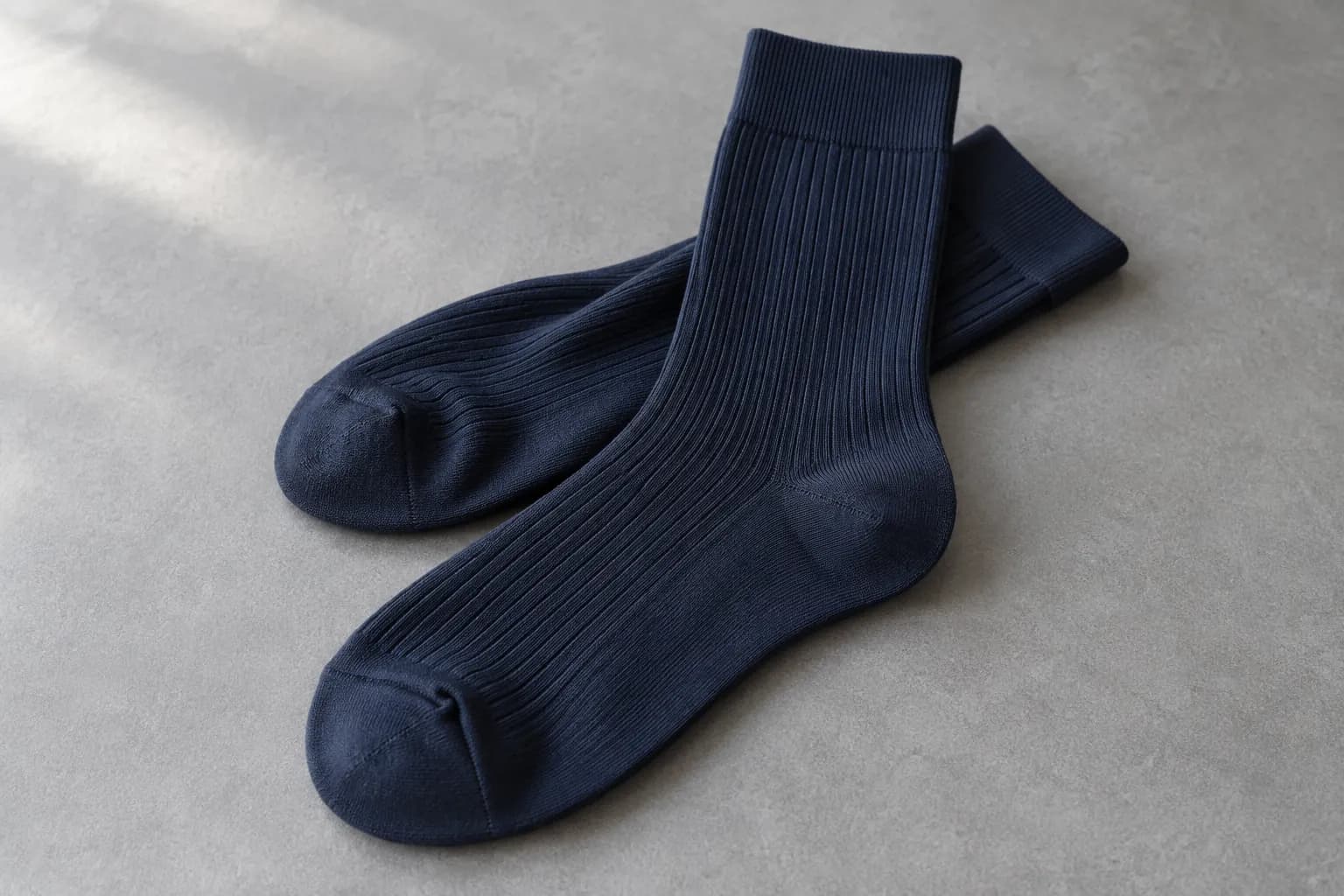
Reselling a sock and changing its branding are different decisions
A retailer may buy a finished supplier-branded sock for resale. That wholesale purchase does not by itself settle permission to relabel it, alter it or reproduce its design. Ask the relevant supplier what the proposed arrangement allows rather than treating purchase, branding and exclusivity as the same agreement.
A white-label starting point may involve a supplier-offered design with agreed branding choices. First establish that the base is actually offered for that purpose and which changes can be considered. A reference photo, a previous purchase or the phrase white label is not evidence of current availability or permission.
For a newly developed own-brand sock, your wearer needs and legitimately usable references can inform the specification review. They do not establish a right to copy another product or prove that its feel and fit can be reproduced. Product feasibility and any use or change permissions are separate questions; neither is resolved by this guide.
One retail reference, two change requests
In this hypothetical example, a retailer likes the cuff feel and understated appearance of an adult dress sock it has sold. It wants an own-brand line. The original product's construction, supply status and permitted uses are not confirmed; the illustration is not a stock item or an approved sample.
Request A asks whether a suitable supplier-offered base could carry the retailer's packaging. Request B asks for a newly reviewed sock specification. Neither request assumes that the reference product is available to adapt. Both can begin while details remain open.
| Decision | Request A: review a proposed base | Request B: develop a specification |
|---|---|---|
| Starting status | Confirm who offers the base and what branding or changes may be considered. | Use your wearer brief and legitimately usable reference to discuss a new product; do not assume permission to copy. |
| Retain | The target dress-sock use and desired cuff feel, not an unverified exact match. | The same wearer needs and priority fit requirements. |
| Change requested | Your own paper band and label; changes to the sock body remain a separate question. | Your color direction, size requirements and a knitted monogram, subject to review. |
| Still unconfirmed | Base availability, permission to brand or change it, and what a proposed sample would represent. | Feasible construction, material, artwork detail and whether the developed sample meets your requirements. |
| Next decision together | Establish whether this base route can actually be considered or whether a different production brief is needed. | Agree a sample brief without promising duplication, exclusive use or a specific outcome. |
Two ways to ask us about the transition
Request A could read: We want an adult dress sock with a similar cuff feel and our own paper band. We have not confirmed a base product or permission to adapt the reference. Can you help review a suitable starting point and clarify which branding changes could be considered?
Request B could read: We want an own-brand dress sock for the same wearer, with our color direction, size requirements and knitted monogram. The construction is open. Can you help develop a sample brief around those requirements rather than assuming the reference can be reproduced?
These are complete example requests, not wording you must copy. Existing retailers can bring the requirements and approvals they already use. If you are starting your first line, tell us the intended wearer and the idea you have so far.
Separate permission, production review and sample approval
Confirm reference-use and change permissions with the relevant parties; a production discussion is not legal clearance. Separately, review whether a proposed base or new specification can be supplied. Only then can a sample be understood against the agreed product and artwork scope.
When a sample is available, compare the wearer and product requirements that matter to your brief. A matching photograph does not establish matching cuff feel, stretch or fit. Keep an unresolved detail open rather than turning the reference or a digital illustration into an approval.
Branding permission and exclusive use are also different questions. Raise any requested exclusive elements for separate review. No exclusivity, stock, price, MOQ or delivery commitment follows automatically from the words private label or white label.
Start before every question is settled
You do not need a finished specification, reference file or completed permission review to ask about your product idea. Say which assumptions remain open. Do not send another party's confidential files or branding without the appropriate permission.
At SaySock, direct Korean production is the first path reviewed. We can help narrow the product and sample questions, or work from your team's existing specification. Feasibility, MOQ, pricing and timing follow the actual scope review, not simply whether the order is called private label or white label.